PalletWorks® by Cybertrol Engineering is a configurable SaaS production tracking and labeling platform that connects packaging-line operations with ERP and other business systems.
The web-based platform tracks cases and pallets, coordinates label generation and verification, manages production exceptions, and gives authorized operators an opportunity to review production information before it is transferred to ERP.
This creates a controlled handoff between the production line and enterprise systems—helping manufacturers reduce end-of-line rework, improve inventory accuracy, strengthen traceability, and support more reliable order fulfillment.
The final stages of production require several systems and people to work together:
When these activities are disconnected, small errors can move downstream quickly. A label may contain incorrect information. A case may be associated with the wrong production order. A pallet may be completed before an exception is discovered. Production data may reach ERP before an operator has an opportunity to review it.
The result may include mislabeled products, inventory discrepancies, incomplete pallet traceability, manual ERP corrections, product holds, shipping delays, and rework after production is complete.
The objective is not simply to print a label. It is to create a controlled production workflow in which labeling, verification, pallet tracking, operator review, and ERP transactions remain synchronized.
PalletWorks is a configurable production tracking and labeling platform positioned between packaging-line operations and ERP.
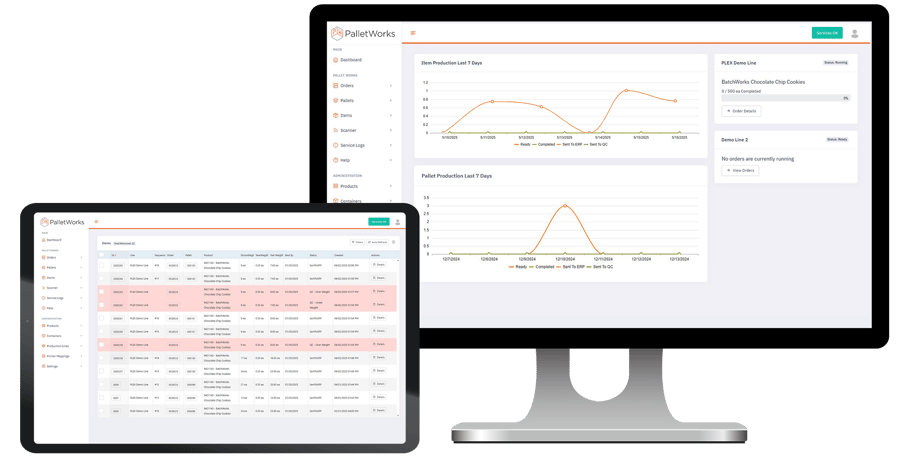
It receives production events from control systems, coordinates labeling activities, builds case and pallet records, captures verification results, and presents production information through a web-based operator portal.
Authorized operators can review production records, resolve approved exceptions, and confirm that the information is ready for synchronization with ERP or another business system.
PalletWorks can:
PalletWorks does not replace ERP. It provides an operational layer that helps ensure the information reaching ERP accurately reflects what occurred on the production line.
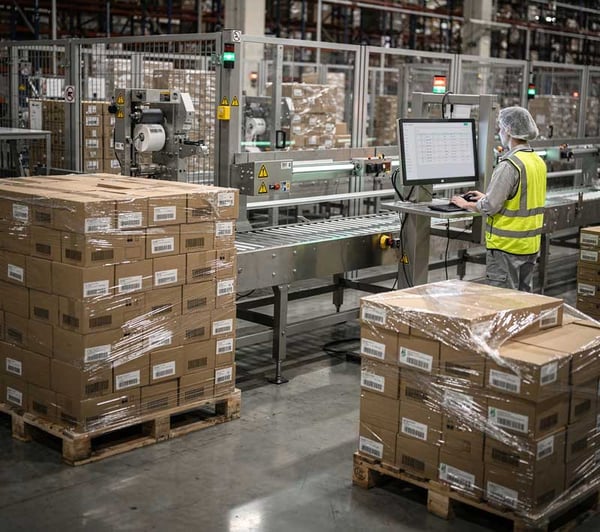
On the production side, PalletWorks can communicate with PLCs, packaging equipment, scales, printers, applicators, barcode scanners, and operator interfaces.
Within the platform, it manages active production orders, case and pallet records, labeling activities, verification results, operator actions, exceptions, and transaction readiness.
Once the production record has been reviewed and validated, PalletWorks transfers the approved information to ERP, MES, or another authorized business system.
This architecture creates an operational review point between physical production and enterprise records rather than allowing incomplete or inaccurate information to move directly from the line into ERP.
This closed-loop workflow helps manufacturers identify and resolve issues while production is still active rather than after inventory transactions have been completed.
A production order is activated through control-system integration or authorized operator entry. The active order establishes the production context used for tracking, labeling, and downstream transactions.
As products are created, PalletWorks receives events from the production control system and associates them with the active order. This creates a digital production record aligned with activity on the line.
PalletWorks coordinates case-label printing using the configured product, order, and business-system information.
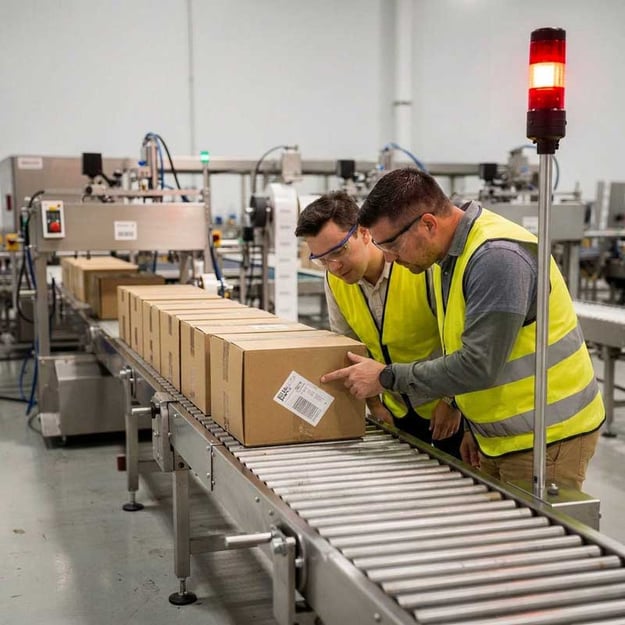
Industrial scanners verify that labels are present and machine-readable. Missing or failed scans can be identified during production rather than after the product has moved farther downstream.
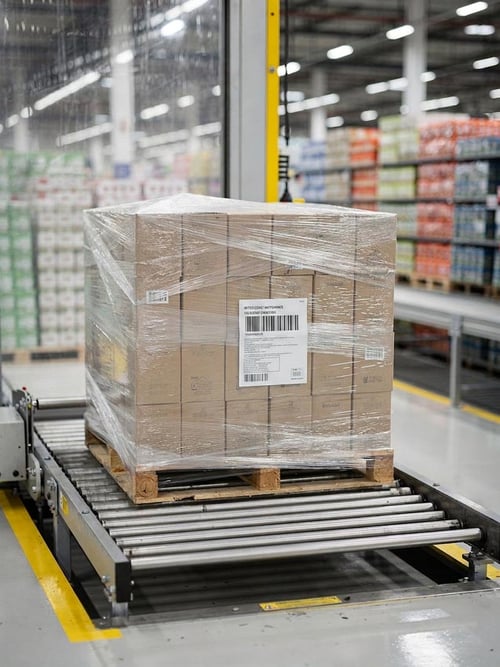
As cases are palletized, PalletWorks associates each item with the correct pallet. The resulting digital pallet record supports pallet-level production tracking and traceability.
PalletWorks generates the pallet label using the completed production record. Verification confirms that the label can be read and remains associated with the cases assigned to the pallet.
Before the record is transferred to ERP, authorized operators can review the production information.
Depending on the configured workflow, they may be able to:
Correct approved information
Apply appropriate bulk updates
Reprint labels
Resolve defined production exceptions
Confirm that the record is ready for synchronization
Once the production information has been reviewed and approved, PalletWorks transfers it to ERP or another business system.
PalletWorks records case- and pallet-level activity throughout end-of-line packaging. It associates production events with active orders and maintains relationships between individual items and completed pallets.
This creates a more complete production record for inventory, traceability, fulfillment, and exception investigation.
Labeling is coordinated as part of the production workflow rather than managed as an isolated printing task.
PalletWorks can generate case and pallet labels based on the active order, product information, production events, and configured business rules. Controlled reprinting helps maintain alignment between the physical label and the production record.
Scanner integration verifies that labels are present and machine-readable.
When a label is missing or unreadable, the exception can be identified closer to the point of occurrence, before the product is shipped, placed into inventory, or included in a completed ERP transaction.
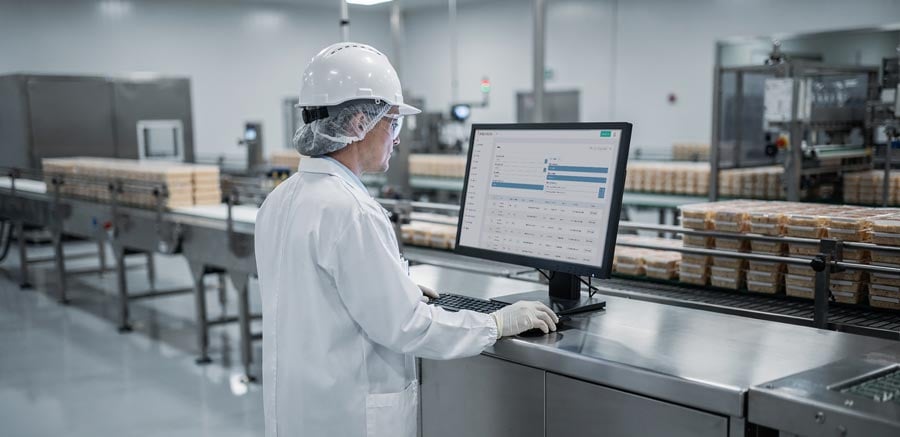
The PalletWorks portal gives operators and supervisors a structured point for reviewing production records before ERP synchronization.
Permissions, editable fields, approval rules, reprint controls, and exception workflows are defined during implementation so users can take appropriate action without introducing uncontrolled changes.
PalletWorks connects systems that often operate independently, including PLCs, packaging equipment, labeling hardware, scanners, operator interfaces, ERP systems, MES platforms, and approved REST API endpoints.
The integration approach is defined around the facility’s architecture, data ownership, transaction timing, and recovery requirements.
ERP systems depend on accurate production transactions. Once incorrect information has been posted, resolving the issue may require coordination among operations, inventory control, quality, shipping, engineering, and IT.
PalletWorks introduces a review and validation point before the transaction is finalized.
This can help manufacturers:
Catch labeling and production exceptions while the product is still on the line
Reduce corrective ERP transactions
Improve alignment between physical production and inventory records
Maintain more accurate case-to-pallet relationships
Give operators a controlled way to resolve approved exceptions
Reduce downstream rework caused by incomplete or incorrect information
The practical advantage is timing: issues can be addressed closer to where they occur.
Manufacturing sites may use different terminology, equipment, ERP transaction rules, operator responsibilities, and exception-handling procedures. PalletWorks is a standardized software platform configured around those operational requirements.
This approach provides greater consistency and maintainability than a one-off custom application while allowing the system to fit the facility’s actual production workflow.
For manufacturers with multiple sites, PalletWorks can also provide a common platform foundation while preserving necessary facility-level configuration.
Configuration may include:
Operator terminology and screen content
Role-based data visibility
Production and labeling workflows
Order activation methods
Review and approval steps
ERP synchronization triggers
Site-specific operating rules
Most production-labeling projects are implemented on active production lines where existing PLC logic, printers, scanners, ERP interfaces, and operator workflows are already in place. Successful deployments must account for these existing systems while minimizing disruption to production.
PalletWorks is designed to integrate with established manufacturing environments rather than requiring wholesale replacement of existing packaging assets. During implementation, Cybertrol evaluates the production workflow, automation systems, labeling hardware, ERP integration, operator processes, and OT infrastructure to ensure the solution aligns with your existing operation.
This approach helps reduce implementation risk while creating a system that is easier to operate, troubleshoot, and maintain.
Production labeling software affects live packaging operations. Successful implementation requires more than installing an application and connecting a printer.
Cybertrol applies its seven-step Proven Process to PalletWorks projects. This structured delivery framework helps align the software, control system, industrial devices, operator workflow, OT infrastructure, and ERP interface before startup.
Cybertrol works with operations, engineering, IT/OT, and business-system stakeholders to understand the current packaging workflow, labeling and traceability requirements, existing system constraints, known production exceptions, and available startup windows.
Functional requirements establish the system boundaries, data ownership, production events, operator roles, exception-handling requirements, integration responsibilities, and acceptance criteria.
Cybertrol designs the integrated system around the approved requirements. This may include control-system interfaces, device communication, network architecture, operator screens, labeling sequences, ERP transaction logic, security requirements, and recovery behavior.
PalletWorks is configured and the required production, device, and business-system interfaces are developed. Cybertrol’s Automation, Digital Manufacturing, Information Systems, and OT Systems engineers coordinate the software, controls, infrastructure, and hardware as one production system.
The complete workflow is tested before production deployment. Testing covers normal operation and defined exception conditions, including order activation, label printing, scanner verification, pallet completion, reprints, operator corrections, communication interruptions, and ERP transaction handling.
Startup is coordinated around plant production requirements. Where appropriate, offline testing, simulation, staged integration, and phased deployment are used to reduce disruption and startup risk.
The system is turned over with the training, documentation, support arrangements, and lifecycle responsibilities needed for continued operation.
Production labeling projects span multiple technical disciplines. Software is only one part of the solution. Successful implementations also depend on automation systems, packaging equipment, industrial devices, OT infrastructure, ERP integration, and long-term operational support.
PalletWorks is backed by Cybertrol Engineering's multidisciplinary team, bringing together the expertise required to design, integrate, deploy, and support production-critical end-of-line systems.
PalletWorks implementations can draw on expertise in:
Automation Engineering
Digital Manufacturing
Information Systems
OT Systems and Industrial Cybersecurity
Hardware and device integration
ERP and production-system integration
Project management and lifecycle support
This multidisciplinary approach reduces handoffs between separate software, controls, infrastructure, and service providers.
Implementation decisions are evaluated against real operating conditions, including:
What happens when a scanner or printer fails?
How is an interrupted ERP transaction recovered?
How are reprints controlled?
Can the workflow be tested before startup?
How will support personnel diagnose an issue?
How will future changes be documented and maintained?
Industrial infrastructure, networking, virtualization, and cybersecurity.
MES, reporting, traceability, dashboards, and production information systems.
Dedicated engineering support, troubleshooting, and lifecycle services.
Products, labels, packaging formats, ERP systems, equipment, networks, and operating procedures continue to change after commissioning.
Cybertrol can support the PalletWorks lifecycle through:
Remote diagnostics and technical troubleshooting
Application and controls support
OT Systems support
Production-workflow updates
Integration modifications
System enhancements
24/7/365 engineering support
The objective is not only to deploy PalletWorks, but to help maintain reliable operation as the manufacturing environment changes.
Production labeling software coordinates the creation, application, verification, and recording of labels within a manufacturing workflow. Unlike standalone label-design software, it can connect labeling activity with production orders, control systems, pallet records, operator actions, and ERP transactions.
PalletWorks tracks cases and pallets, coordinates label generation, verifies label readability, manages production exceptions, supports authorized operator review, and transfers validated production information to ERP or other business systems.
PalletWorks operates as an operational layer between packaging-line systems and ERP. It receives production events from controls, manages labeling and pallet records, and gives operators an opportunity to review information before validated data is synchronized with ERP.
No. PalletWorks helps ensure that production and labeling information is accurate before transactions are finalized in ERP.
PalletWorks is focused on end-of-line production tracking, labeling, verification, pallet association, exception handling, and ERP synchronization. Whether it operates alongside an MES depends on the facility’s system architecture and functional requirements.
PalletWorks is designed to integrate with established production control systems, printers, applicators, scanners, and packaging equipment. Compatibility and interface requirements are evaluated during the definition and design process.
PalletWorks coordinates labeling with the active production order and uses scanner feedback to identify missing or unreadable labels. Authorized operators can review exceptions and correct approved information before production data is transferred to ERP.
No. PalletWorks is a configurable SaaS platform rather than a custom application built from the ground up for each facility. It is configured to align with approved workflows, terminology, user roles, devices, and ERP integration requirements.
PalletWorks can provide a common platform for manufacturers seeking greater consistency across facilities. Each deployment still requires evaluation of site-specific controls, equipment, workflows, infrastructure, and ERP requirements.
Deployment may include early requirements definition, offline development, workflow simulation, device testing, staged integration, and coordinated startup activities. The appropriate strategy depends on the existing environment and available production windows.
What is production labeling software?
Production labeling software coordinates the creation, application, verification, and recording of labels within a manufacturing workflow. Unlike standalone label-design software, it can connect labeling activity with production orders, control systems, pallet records, operator actions, and ERP transactions.
What does PalletWorks do?
PalletWorks tracks cases and pallets, coordinates label generation, verifies label readability, manages production exceptions, supports authorized operator review, and transfers validated production information to ERP or other business systems.
Where does PalletWorks fit between the production line and ERP?
PalletWorks operates as an operational layer between packaging-line systems and ERP. It receives production events from controls, manages labeling and pallet records, and gives operators an opportunity to review information before validated data is synchronized with ERP.
Does PalletWorks replace ERP?
No. PalletWorks helps ensure that production and labeling information is accurate before transactions are finalized in ERP.
Does PalletWorks replace MES?
PalletWorks is focused on end-of-line production tracking, labeling, verification, pallet association, exception handling, and ERP synchronization. Whether it operates alongside an MES depends on the facility’s system architecture and functional requirements.
Can PalletWorks integrate with existing equipment?
PalletWorks is designed to integrate with established production control systems, printers, applicators, scanners, and packaging equipment. Compatibility and interface requirements are evaluated during the definition and design process.
How does PalletWorks help reduce labeling errors?
PalletWorks coordinates labeling with the active production order and uses scanner feedback to identify missing or unreadable labels. Authorized operators can review exceptions and correct approved information before production data is transferred to ERP.
Is PalletWorks custom software?
No. PalletWorks is a configurable SaaS platform rather than a custom application built from the ground up for each facility. It is configured to align with approved workflows, terminology, user roles, devices, and ERP integration requirements.
Can PalletWorks support multiple facilities?
PalletWorks can provide a common platform for manufacturers seeking greater consistency across facilities. Each deployment still requires evaluation of site-specific controls, equipment, workflows, infrastructure, and ERP requirements.
How can PalletWorks be deployed with minimal production disruption?
Deployment may include early requirements definition, offline development, workflow simulation, device testing, staged integration, and coordinated startup activities. The appropriate strategy depends on the existing environment and available production windows.
PalletWorks connects production tracking, labeling, verification, pallet records, operator review, and ERP integration within one controlled workflow.
Whether you are modernizing an existing packaging line or establishing a consistent labeling platform across facilities, the first step is understanding how products, production events, labels, exceptions, and ERP transactions move through the current operation.
Talk with a Cybertrol engineer about:
Your current end-of-line workflow
Labeling and traceability challenges
PLC and packaging-equipment integration
ERP transaction requirements
Operator review and exception handling
Brownfield modernization
Long-term service and support
Senior Principal Engineer | Large Wisconsin Cheese Manufacturer

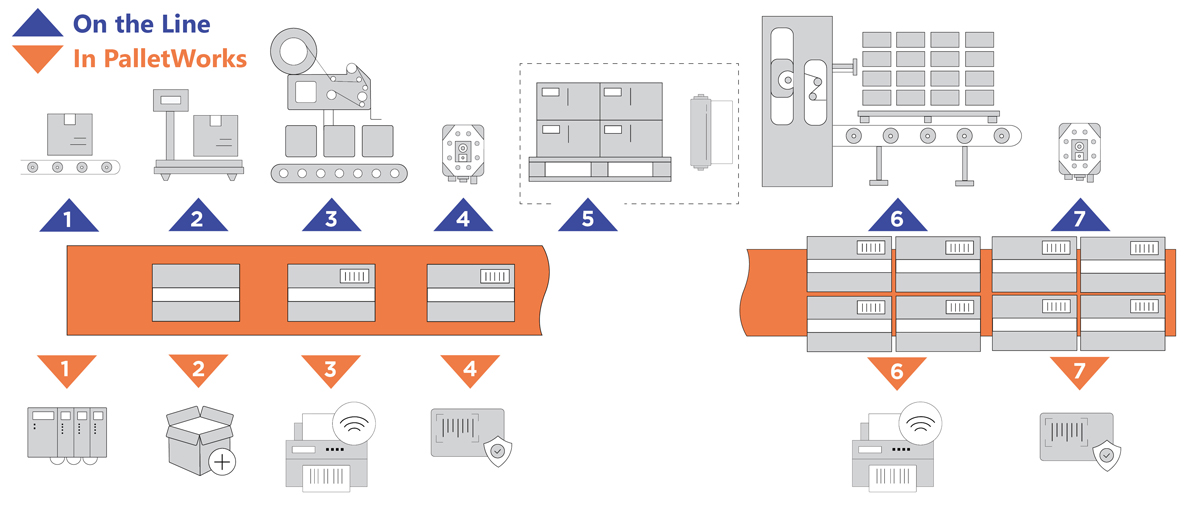
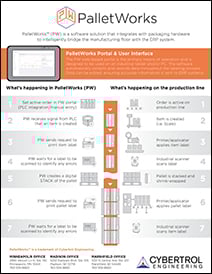
Order is active on production line

Set active order in PW portal (PLC integration/manual entry)

Item is created (i.e. Scale)

PW receives signal from PLC that an item is created

Printer/applicator applies item label

PW sends request to print item label

Industrial scanner scans item label

PW waits for item label to be scanned to identify any errors

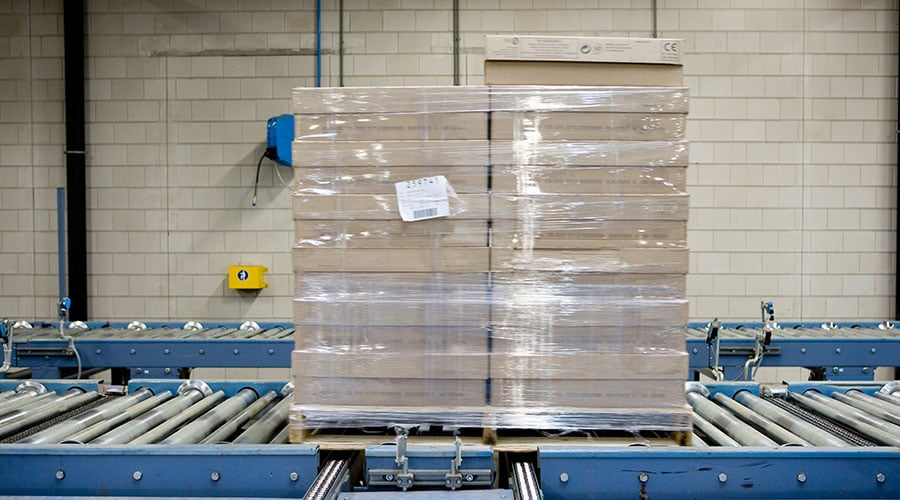
Pallet is stacked and shrink-wrapped

PW creates a digital STACK of the pallet

Printer/applicator applies pallet label

PW sends request to print pallet label

Industrial scanner scans pallet label

PW waits for pallet label to be scanned to identify any errors
Lorem ipsum dolor sit amet consectetur. Eget platea integer nisl integer leo varius quis. Ac nunc proin nunc quam eros mauris ut. Velit eu at lacus aliquam porttitor.
![]()
Order is active on production line
![]()
Set active order in PW portal (PLC integration/manual entry)
![]()
Item is created (i.e. Scale)
![]()
PW receives signal from PLC that an item is created
![]()
Printer/applicator applies item label
![]()
PW sends request to print item label
![]()
Industrial scanner scans item label
![]()
PW waits for item label to be scanned to identify any errors
![]()
Pallet is stacked and shrink-wrapped
![]()
PW creates a digital STACK of the pallet
![]()
Printer/applicator applies pallet label
![]()
PW sends request to print pallet label
![]()
Industrial scanner scans pallet label
![]()
PW waits for pallet label to be scanned to identify any errors
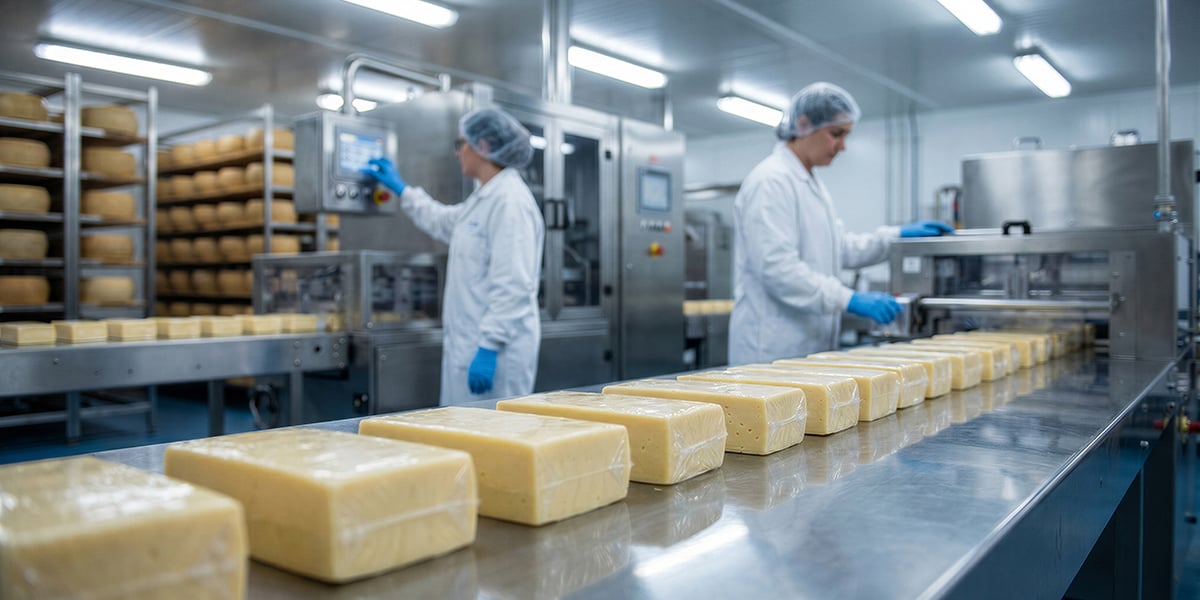
A large North American dairy manufacturer needed a more reliable way to manage pallet labeling, tracking, barcode verification, and ERP communication across its packaging operations.
The Challenge: For many manufacturers, each step at the end-of-the-line often has some sort of manual component and multiple people involved, creating challenges with efficiency and productivity. This level of human interaction frequently leads to errors when printing and applying pallet labels, which in turn causes inventory inaccuracies.
A cheese manufacturing plant required tracking of cheese from vat to barrel in a reliable electronic information system.
Minneapolis - Main Office
6550 Wedgwood Rd N, Ste. 300
Maple Grove, MN 55311
763.559.8660
Marshfield Office
204b E Upham St
Marshfield, WI 54449
763.559.8660
Madison Office
4602 S Biltmore Ln, Ste. 119
Madison, WI 53718
763.559.8660
24/7/365 Support
1.800.554.5104
support@cybertrol.com
Join Our Newsletter