
Cybertrol’s Enterprise Reporting Platform bridges operational technology and enterprise systems to make manufacturing data usable at scale. We help manufacturers collect, contextualize, and visualize production data to deliver secure, enterprise‑wide dashboards and reporting that connect plant‑level activity to business decisions.
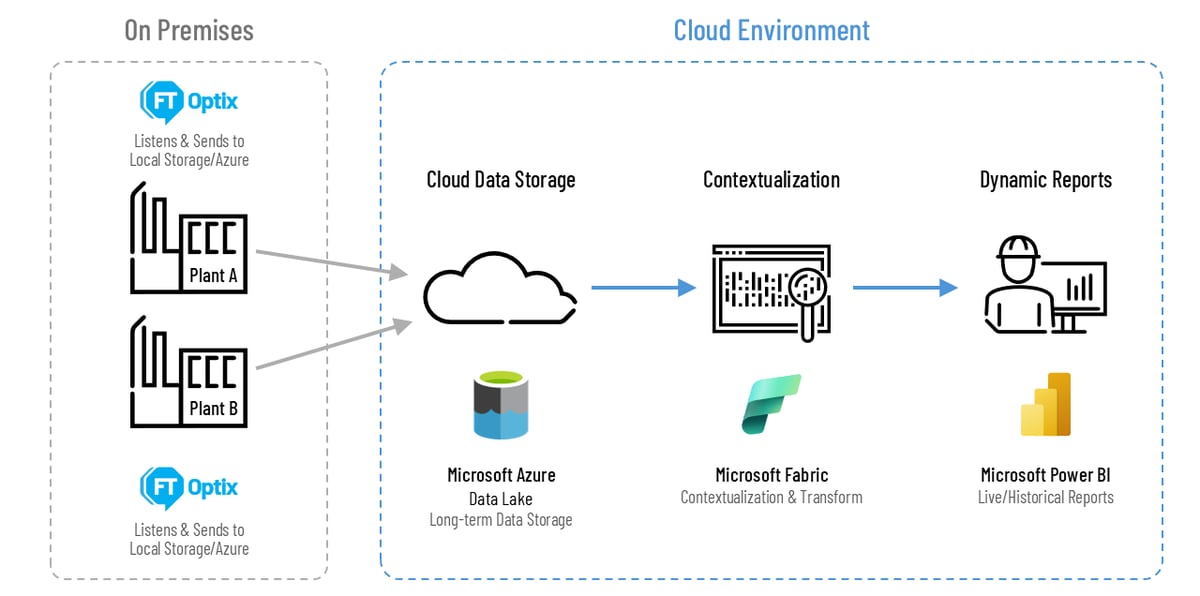
Cybertrol’s Enterprise Reporting Platform connects plant‑floor data with enterprise systems to make manufacturing data usable at scale. By bridging operational technology and enterprise reporting tools, the platform delivers timely visibility, standardized reporting, and actionable insight across sites, processes, and roles.
Designed for multi‑site manufacturers, the platform supports both day‑to‑day operational awareness and long‑term performance analysis, all through secure, browser‑based access.
Establish a consistent, enterprise view of manufacturing performance across all locations. Standardized dashboards allow leadership teams to compare sites, identify trends, and understand where attention is needed without relying on spreadsheets or manually consolidated reports.
Plant teams gain access to site‑specific dashboards that surface current production status, key performance indicators, and process health. These views support faster response to issues, improved coordination between shifts, and clearer communication between operations and engineering.
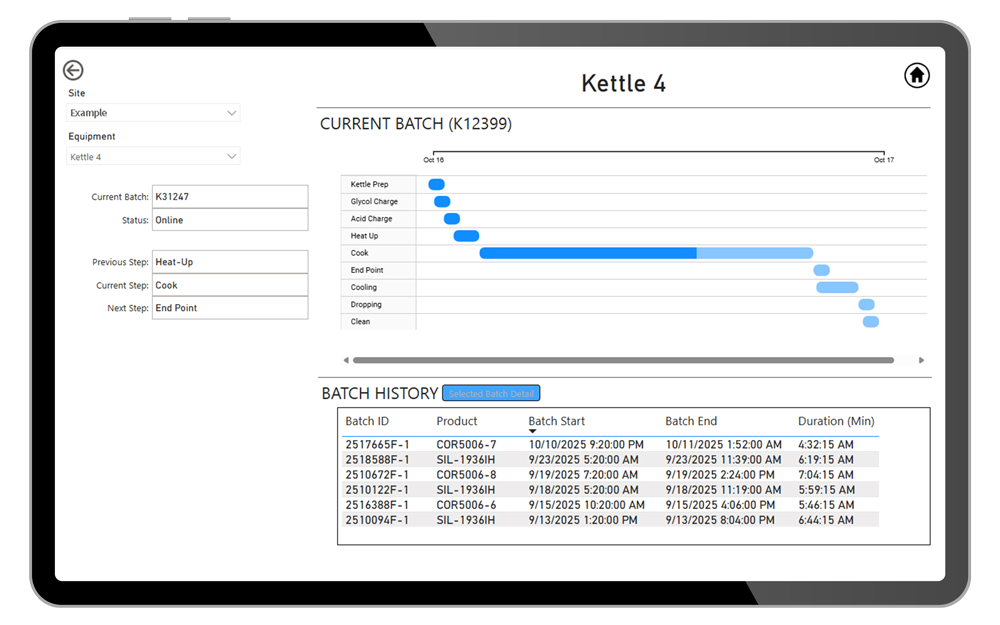
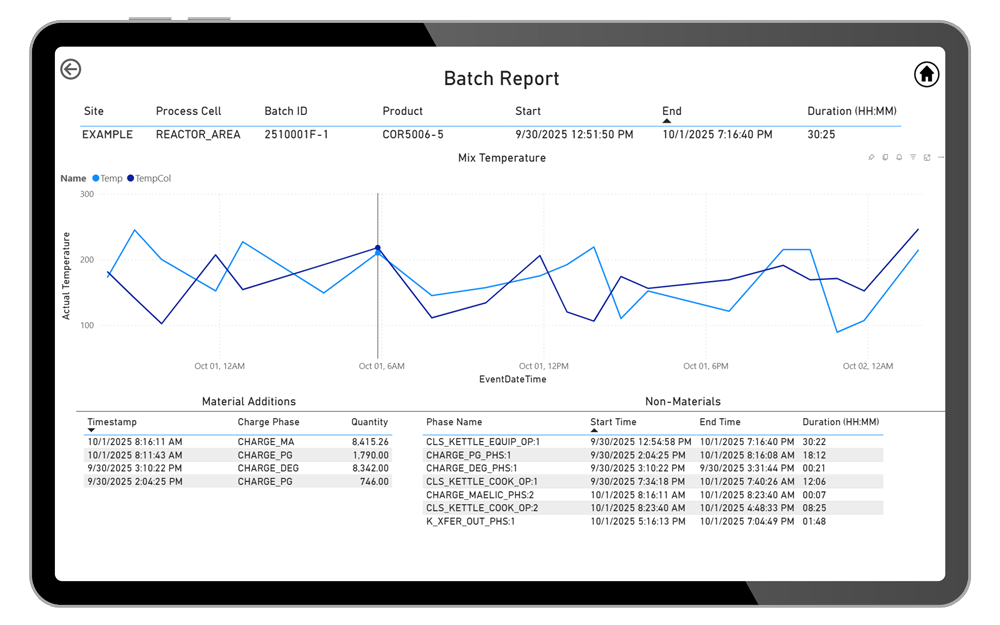
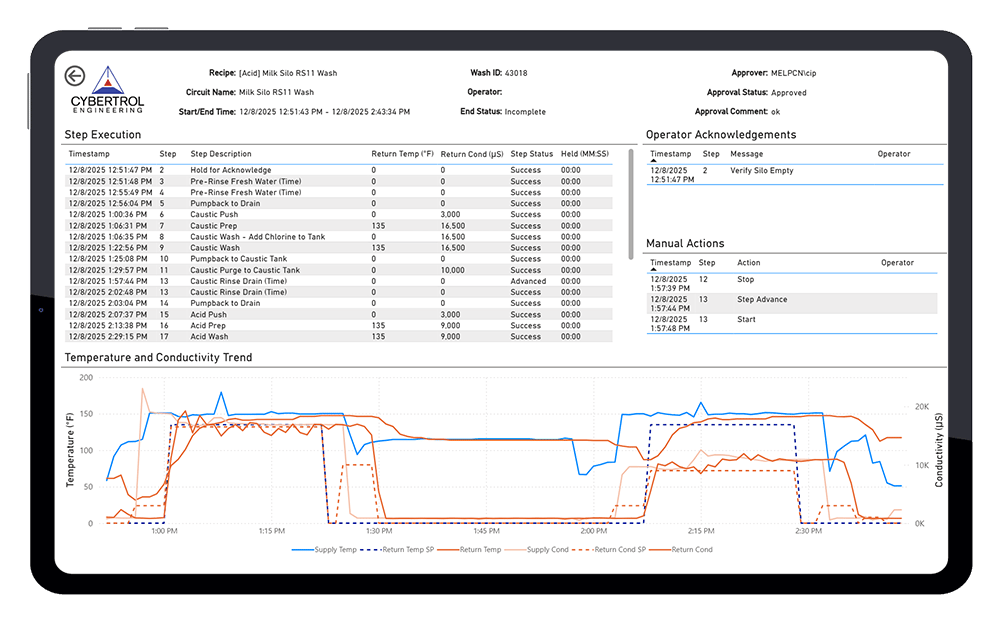
For batch‑driven and process manufacturing environments, the platform provides detailed batch summaries, batch histories, and comparisons against predefined or “golden” batches. Users can investigate deviations, analyze process performance over time, and improve consistency across runs and sites.
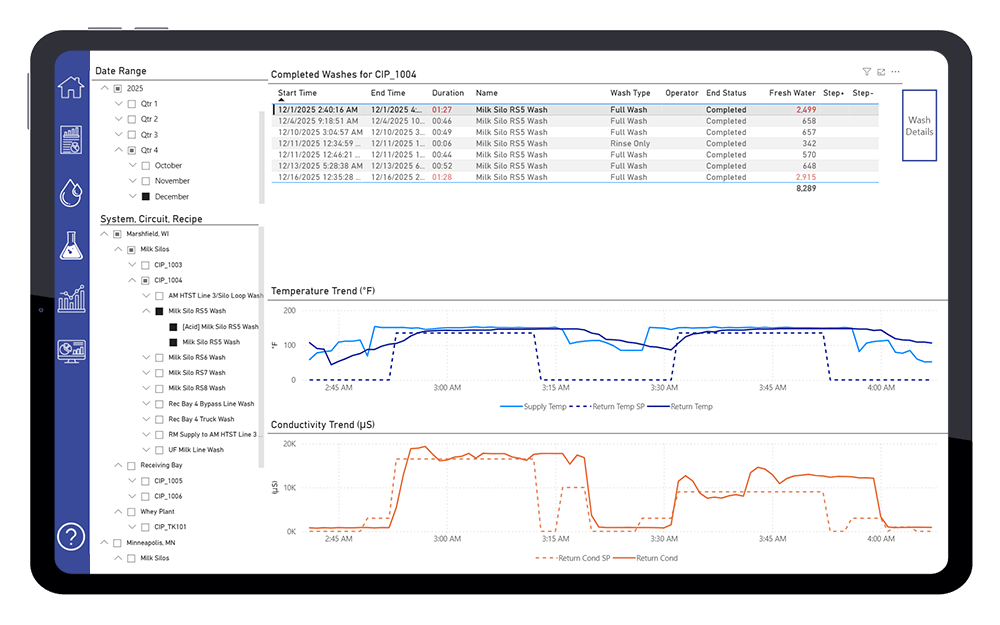
Operational Technology (OT) data is collected directly from plant systems and made available for timely monitoring alongside long‑term historical analysis. This combination gives teams the context needed to understand what is happening now, why it happened, and how performance is trending over time.

The Enterprise Reporting Platform is designed to work with the realities of industrial environments and existing automation investments. It integrates with common manufacturing data sources, including:
PLC and control system tag data
Batch and MES platforms
Existing SQL‑based data sources
Industrial historians used for high‑resolution trending
Rather than replacing plant systems, the platform builds on them. Data is organized and contextualized into a consistent, enterprise‑ready model that supports reliable reporting across sites.

A Unified Namespace (UNS) creates a standardized, real-time data layer that connects plant floor and enterprise systems through technologies such as MQTT, OPC UA, SQL, and APIs. By organizing data into a common structure, manufacturers can improve visibility, simplify integrations, and support scalable reporting and analytics initiatives.
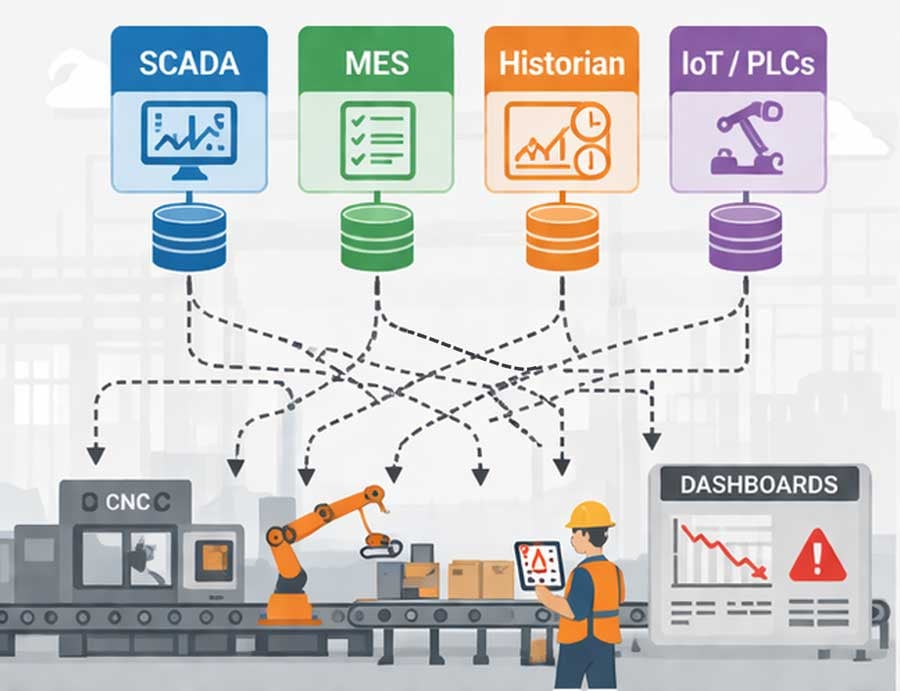
Without a UNS, systems such as SCADA, MES, historians, PLCs, and reporting platforms often operate independently. As integrations grow, data becomes harder to standardize, maintain, and analyze across operations.
Common challenges include:
Point-to-point integrations
Inconsistent reporting data
Limited operational visibility
Slower troubleshooting and analytics
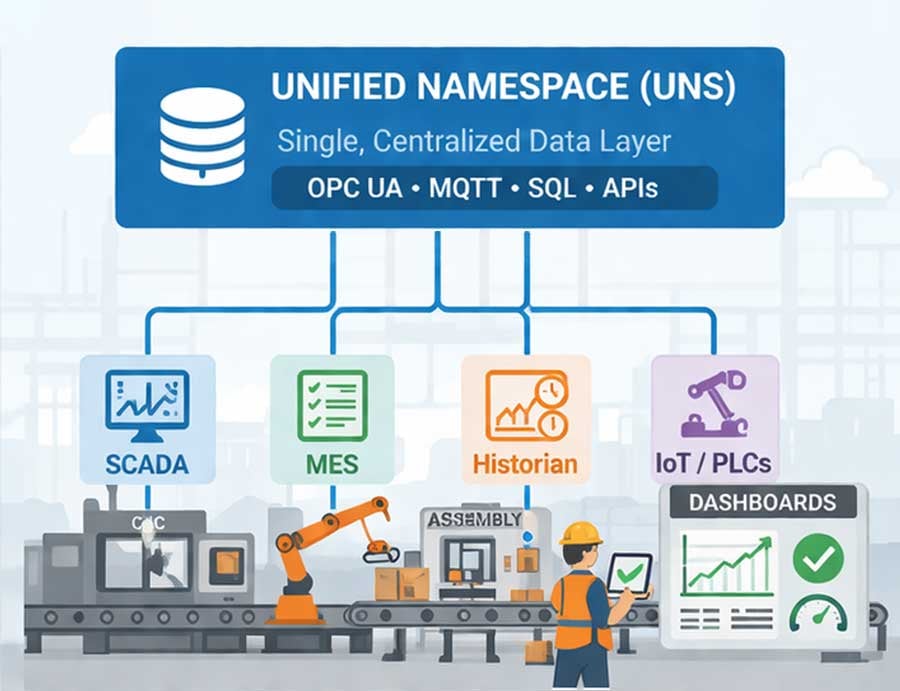
A UNS centralizes operational data into a structured architecture that supports real-time communication between systems. Data can be enriched with context using ISA-95 models to improve reporting, analytics, and future Industry 4.0 initiatives.
Benefits include:
Real-time data visibility
Simplified system integration
Consistent enterprise reporting
Support for edge-to-cloud architectures
Unified Control + Information Architecture
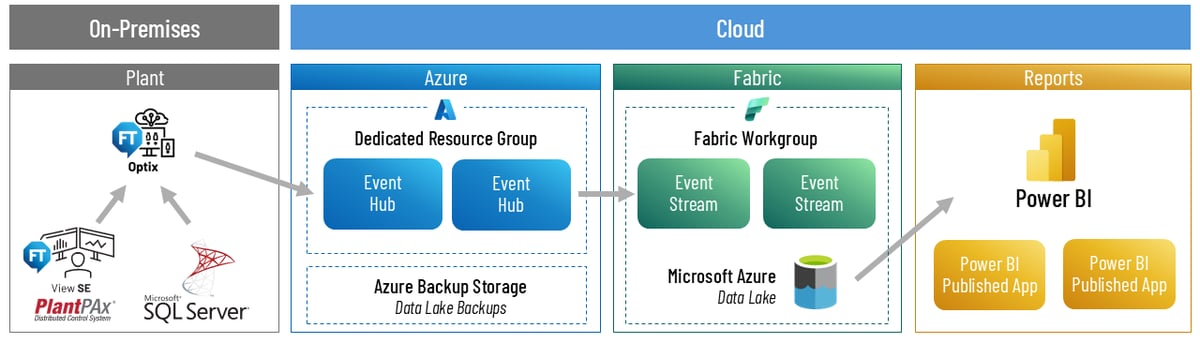
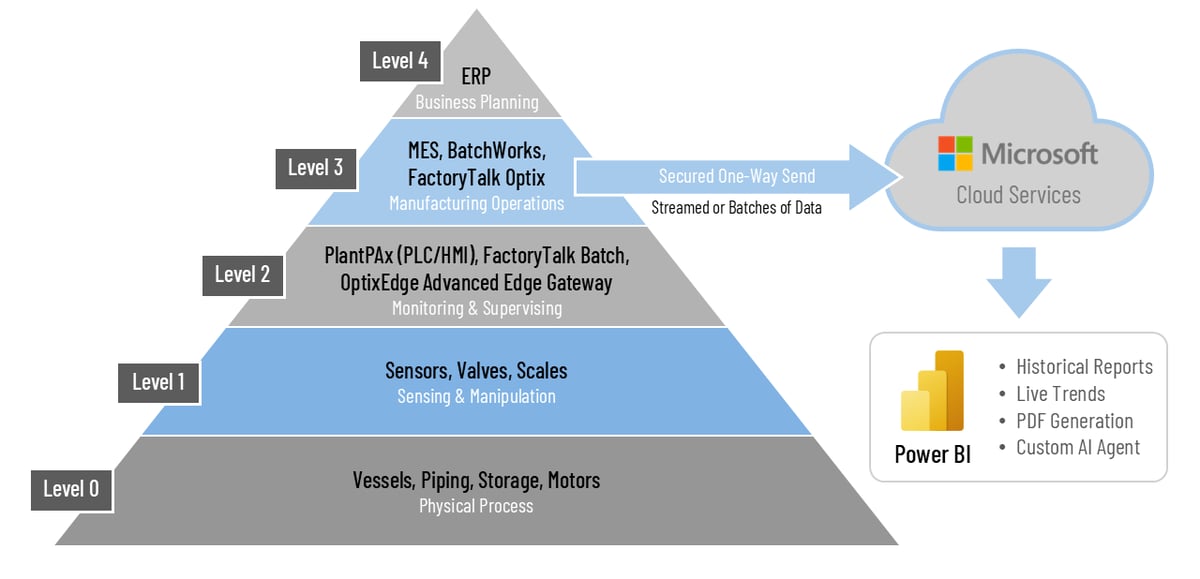
At the core of the platform is a secure, cloud‑hosted architecture that supports scalability, governance, and enterprise access:
Centralized Cloud Data Lake – Operational data from multiple plants is ingested and stored in a centralized cloud data lake, creating a single source for enterprise reporting and analysis.
Data Contextualization – Raw OT data is transformed into business‑ready information that aligns with manufacturing processes, equipment, and production context.
Web‑Based Reporting – Interactive dashboards and reports are delivered through standard web browsers with appropriate authentication, allowing users to access information without specialized software.
This architecture supports enterprise reporting while maintaining appropriate separation between plant‑level control systems and business analytics.

Different users need different views of the same data. The Enterprise Reporting Platform supports multiple reporting experiences tailored to each audience:
Executive and Management Dashboards – High‑level KPIs, production summaries, and cross‑site comparisons that support strategic planning and performance review.
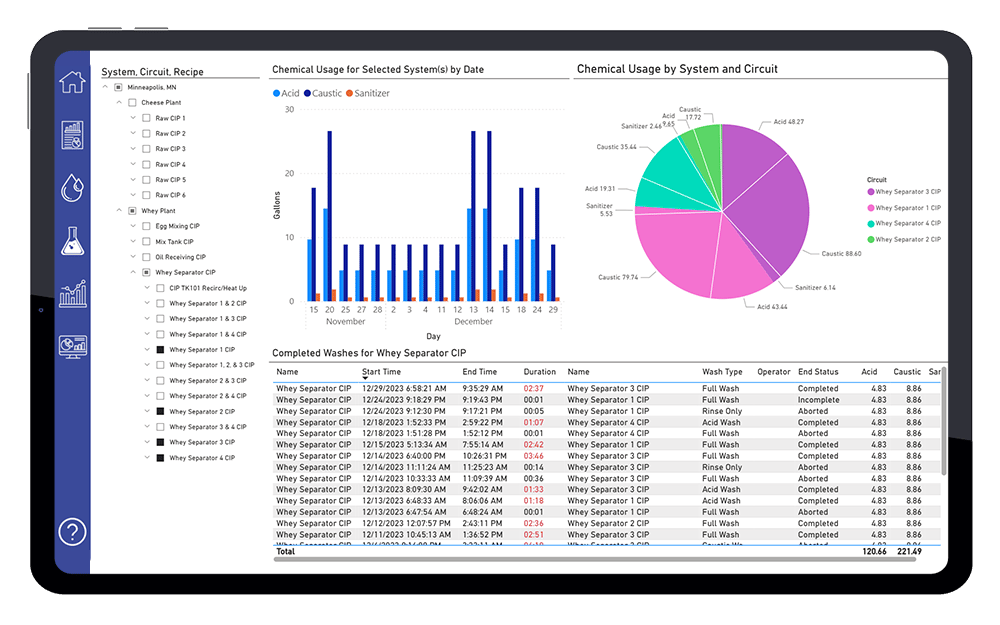
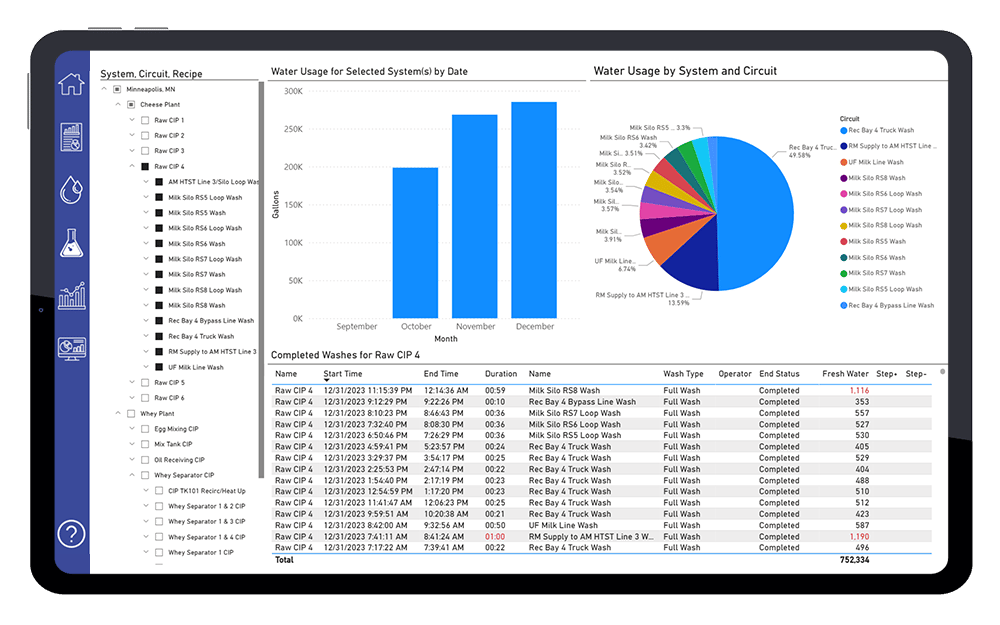
Operations and Engineering Views – Detailed process, equipment, and batch insights focused on troubleshooting, optimization, and continuous improvement.
Compliance and Historical Reporting – Structured historical data suitable for audits, quality analysis, and long‑term record retention.
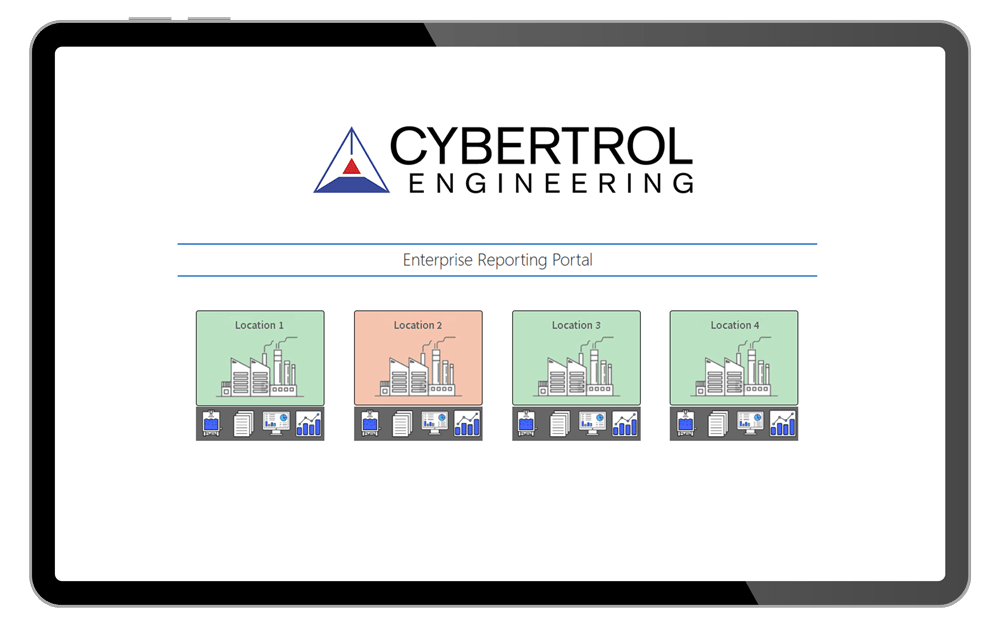
Company Overview – An enterprise-wide display that summarizes all connected production sites. Each site panel can dynamically change appearance based on status or events, and navigation icons can be configured to open site-specific or functional sub-reports.
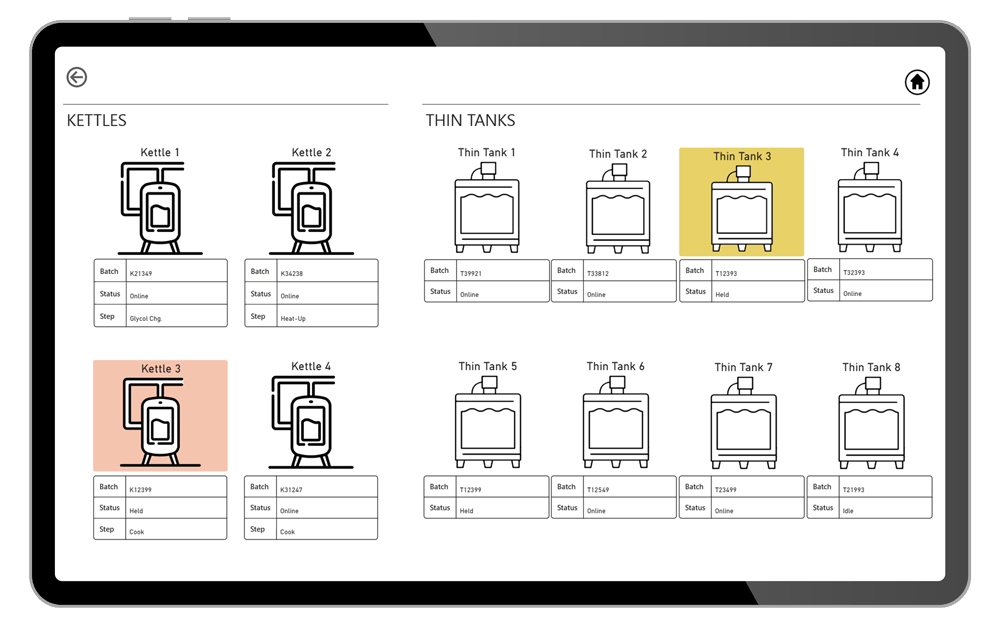
Manufacturing environments evolve over time. The Enterprise Reporting Platform is designed to scale and adapt as needs change:
Modular report design supports the addition of new assets, processes, or sites.
Standardized data models promote consistent reporting across the enterprise.
A flexible architecture enables future expansion into advanced analytics, machine learning, and ERP or business system integration.
Cybertrol follows a structured, customer‑centric approach to implementation:
Requirements Definition – Collaborative development of reporting requirements and visual mockups aligned with operational and business needs.
Architecture & Design – Secure, scalable system design aligned with IT and OT standards.
Development & Integration – Data collection, contextualization, and report development using proven manufacturing intelligence practices.
Validation & Review – Iterative review cycles to verify data accuracy, usability, and business value.
Deployment & Support – Transition to production with options for ongoing support and future enhancements.
Cybertrol brings deep experience in industrial automation, operational technology, and manufacturing intelligence. By understanding both the plant floor and the enterprise, Cybertrol helps manufacturers turn production data into clear, reliable insight that supports better decisions at every level.
Minneapolis - Main Office
6550 Wedgwood Rd N, Ste. 300
Maple Grove, MN 55311
763.559.8860
Marshfield Office
204b E Upham St
Marshfield, WI 54449
763.559.8860
Madison Office
4602 S Biltmore Ln, Ste. 119
Madison, WI 53718
763.559.8860
24/7/365 Support
1.800.554.5104
support@cybertrol.com
Join Our Newsletter